
Identify Fake Marukyu Koyamaen Matcha
With the global rise in demand for Japanese matcha, well-known producers such as Marukyu Koyamaen have become increasingly popular — and unfortunately, more vulnerable to imitation products in certain markets.
If you’re purchasing Marukyu matcha online or overseas, here is how to compare authentic packaging with potential counterfeit versions.
Why Counterfeit Products Appear
Premium brands with strong international demand often become targets for imitation. In many cases, counterfeit products attempt to replicate:
-
Bag design
-
Colour scheme
-
Logo placement
-
Japanese text
At first glance, they may look convincing — but small details often reveal inconsistencies.
Check the Print Quality
Authentic Marukyu packaging typically features:
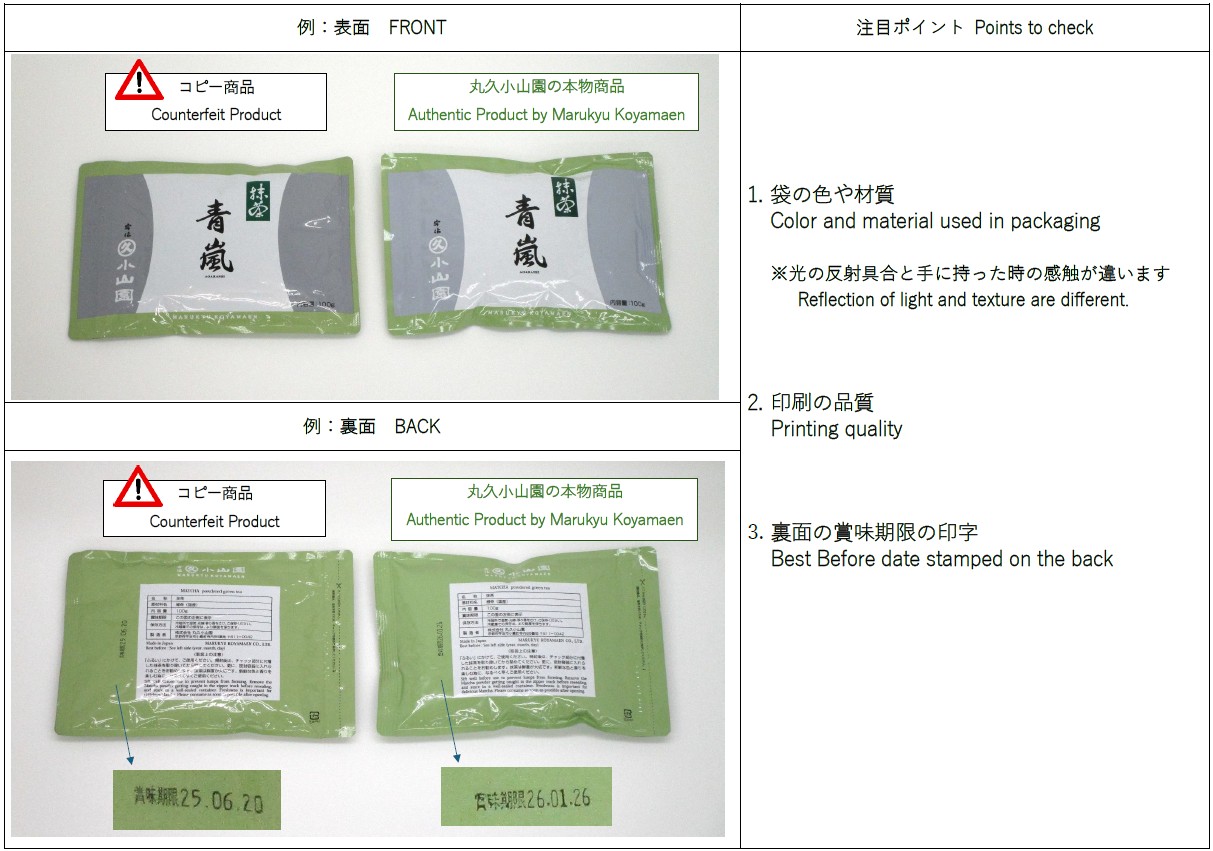
• Sharp, clean printing
• Consistent ink colour
• Clear Japanese characters
• No blurry or faded text
Potential counterfeit items may show:
• Slightly distorted fonts
• Misaligned characters
• Inconsistent green or gold tones
• Lower-resolution printing
When comparing, look closely at the kanji and small text details.
Examine the Production Date Format
Authentic products include clearly printed production or best-before dates in a consistent Japanese format.
Red flags may include:
• Incorrect date formatting
• Smudged or uneven stamping
• Missing lot codes
• Dates that look reprinted or altered
When possible, compare with images from the official manufacturer website.
Inspect the Tin & Seal
Authentic tins should:
• Arrive factory-sealed
• Show consistent lid fit
• Have smooth metal finish
• Contain inner protective packaging
Be cautious if:
• The tin feels unusually lightweight
• The seal appears tampered with
• There is no internal freshness seal
• The powder appears oxidised (yellowish-green)
Consider the Source of Purchase
Because Marukyu does not directly supply many overseas resellers, authenticity often depends on:
• Whether the product is factory-sealed
• Whether the retailer is transparent about sourcing
• Whether storage conditions are explained
• Whether the retailer provides real product photos
Transparency is a strong indicator of credibility.
Is Fake Marukyu Matcha Safe to Drink?
Counterfeit matcha is not automatically dangerous — but the issue is uncertainty.
When origin and manufacturing standards are unknown, consumers cannot verify:
• Cultivation practices
• Food safety compliance
• Storage conditions
• Whether lower-grade powder has been substituted
Because matcha is consumed as whole powdered leaf (not steeped and discarded like regular tea), quality and traceability matter significantly.
The concern is not simply taste — but authenticity and accountability.
Final Thoughts
If you are unsure about a product:
• Compare packaging details carefully
• Look for factory seals
• Review retailer transparency
• Avoid listings with unclear origin information
Premium matcha should be vibrant, smooth, and properly traceable to a reputable producer.
Authenticity protects not only flavour — but confidence in what you are consuming.